
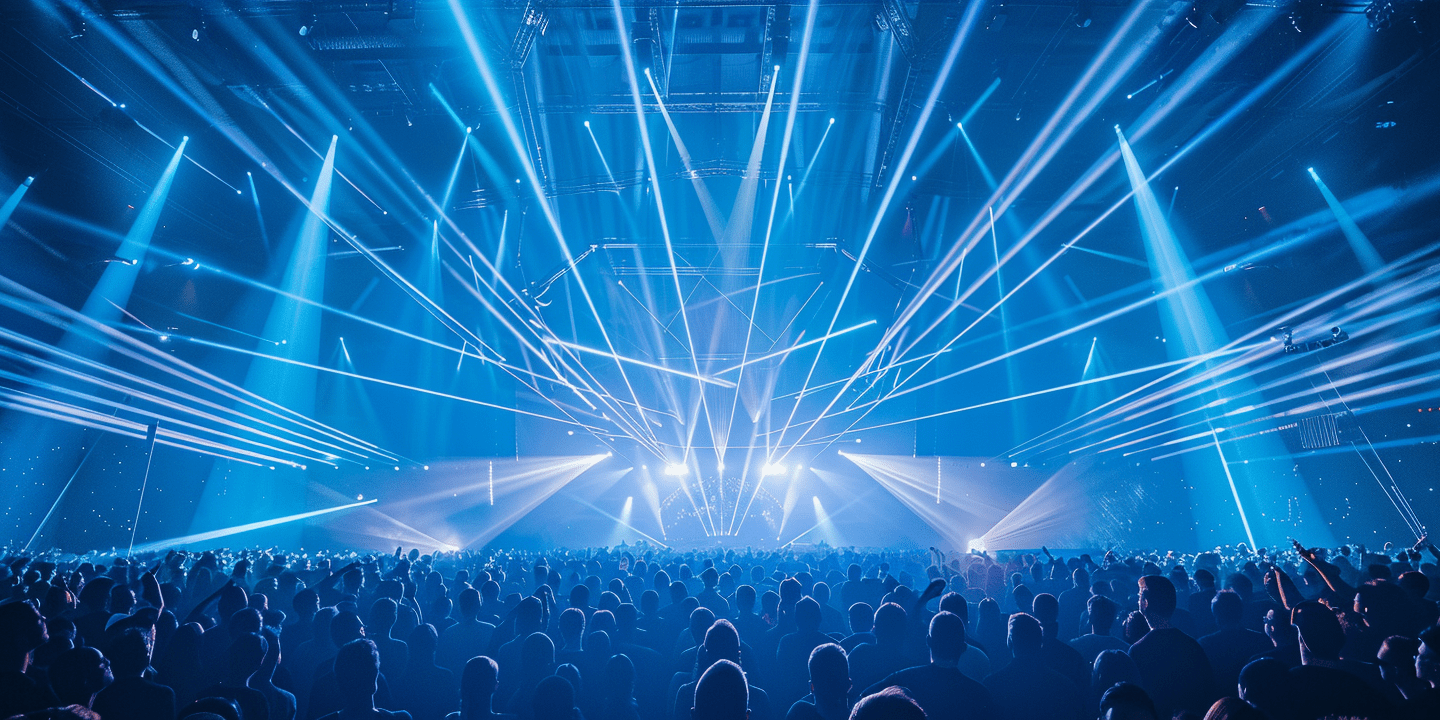
Modern event productions are working with ever brighter, more precise and more colorful lighting systems. Whether it’s a festival in Brazil, a touring show in Europe, an immersive experience in Dubai or a club production in Seoul, the visual intensity of lighting designs has increased significantly worldwide. As a result, one topic is increasingly coming into focus: the blue light hazard, i.e. the photobiological stress on the retina caused by high-energy blue light in the spectral range of around 400 to 500 nanometers.
While Europe has long referred to EN 62471, awareness of this topic is now developing globally. Prolight + Sound is following these developments closely and making it clear how important the safe use of modern LED and display technologies has become for international event practice.
The importance of blue light hazards in international event operations
Blue light is an essential component of modern LED systems. It provides strong color blends, clear contours and enormous brightness. At the same time, it is considered to be particularly photochemically effective and can damage the retina if exposed to high intensities and for long periods.
In the event context, this topic plays a role worldwide, as global developments increase exposure:
- LED systems are now standard in almost all markets
- Immersive experiences with 360-degree LED surfaces are on the rise
- Large arena shows in North America and Asia work with extremely bright white light engines
- Crowded indoor venues such as clubs or EDM venues reduce the distance between the light source and the audience
The closer the audience gets to the light sources, the greater the intensity of the radiation that hits directly at eye level can.
International norms and standards
There are different but partially harmonized regulations on photobiological safety around the world. The international event industry must be familiar with these standards in order to produce safely worldwide.
In Europe, EN 62471 and the IEC 62471 series are the main standards that apply. Germany also takes into account DGUV regulations that relate specifically to the event sector.
Many regions outside Europe also have their own regulations and safety guidelines for the photobiological assessment of light sources. These are often based on international IEC principles, but set different priorities depending on the market. For globally operating production facilities, this means that safety requirements can vary from country to country and should be taken into account at an early stage during planning.
The internationally used risk groups according to IEC are particularly important:
- RG0 for no hazard
- RG1 for low risk
- RG2 for risk with prolonged exposure
- RG3 for hazard even after a short exposure time
Many modern LED spotlights, moving lights and LED walls fall into RG2 or RG3 – depending on the distance and power. International tour productions in particular must integrate these values into their safety concept.
How blue light hazards arise at events

Exposure is not caused by the light source alone, but by a combination of several factors: Intensity, duration, distance and viewing direction. It becomes critical when high-energy radiation acts directly at eye level or when the audience is exposed to bright blue tones for long periods of time.
Typical situations in which risks can arise include
- Light beams with a narrow beam angle that are directed into the audience area repeatedly or over a longer period of time
- White light engines with high blue components
- LED walls that are operated with very high display brightness
- Set-up and sound check phases without suitable protective measures for the crew
- immersive spaces that envelop the field of vision more than classic stage lighting
Children, older people and people with retinal diseases are particularly sensitive. Crew members who have to work in close proximity to the light sources during setup and focusing are also more affected.
Global trends that increase the threat
The international event industry is experiencing several technological developments that are increasing the relevance of the topic.
- Immersive experiences: Formats that use large LED surfaces and all-round projections, such as LED caves or 360-degree rooms, are increasingly being created around the world. Such environments create particularly intense lighting moods.
- Large live productions: Stadium and arena shows often rely on very bright lighting scenes with pronounced blue components that involve large areas of the audience.
- High-power LEDs: Modern LED technologies are becoming ever brighter and enable spectacular effects with more compact devices. Systems such as blue pump LEDs or laser-based light sources deliver significantly higher light intensities in many current productions than previous generations.
- Smaller distances: In clubs, at smaller festivals or event settings, the audience is often very close to the light sources, which can noticeably increase the impact of the light.
Best practices for safe lighting design worldwide
As the intensity of modern lighting systems increases, so does the need for clear, practical lighting solutions.
Safety measures. The following recommendations have proven themselves internationally and are an integral part of professional production processes:
- Use light sources whose safety information is clearly comprehensible.
- Maintain sufficient distance from the audience and crew.
- Do not aim very bright beams of light directly at eye level.
- Only operate LED walls as brightly as the surroundings require.
- Organize the set-up and rehearsals in such a way that no one is unnecessarily burdened.
- Set up the light remotely if possible.
- Inform teams about basic safety aspects.
Touring productions in particular benefit from
The more clearly the specifications are defined, the easier they are to implement in different countries. The clearer the specifications, the easier they are to implement in different countries.
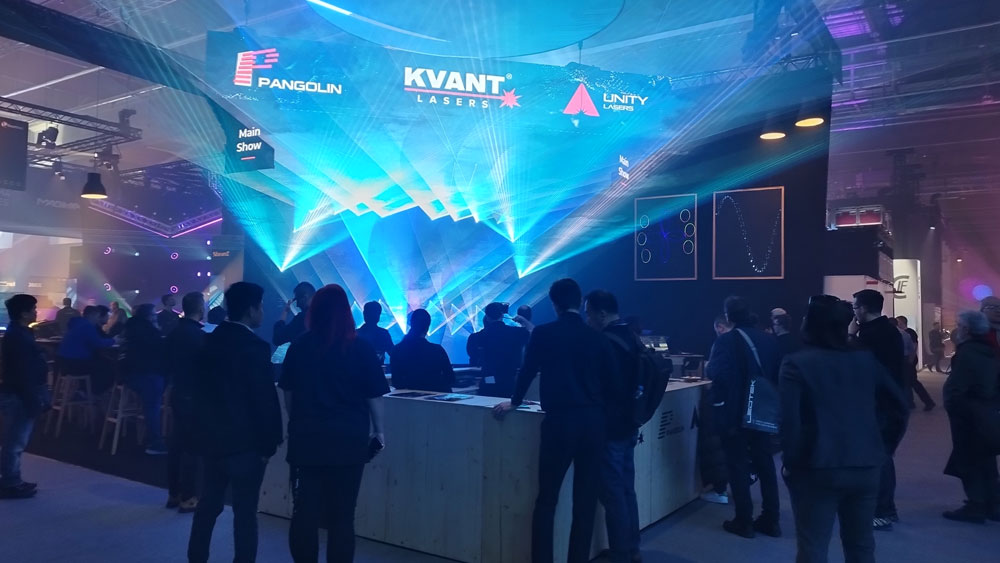
Kvant Prolight + Sound 2024
The role of Prolight + Sound
In Bangkok and Guangzhou, Prolight + Sound offers a platform where experts from different regions can exchange views on current topics in lighting and event technology. This also includes the growing awareness of potential blue light hazards. The exchange between manufacturers, planners and technical crews creates a better understanding of how modern lighting systems can be used safely worldwide.
Anyone who would like to find out more about current developments in safety and lighting design in the event industry will find further exciting insights on the Prolight + Sound blog. Among other things, the security trends in the event industry in 2025 show which factors are shaping modern security concepts. The article AI systems for security in the event industry sheds light on how digital technologies can provide additional protection for events. In addition, Emotionalization of events: How technology, AI and design create powerful experiences offers a look at the role that light, atmosphere and technical staging play in the impact of an event.