
1. the emotional crowd as the heart of the event experience
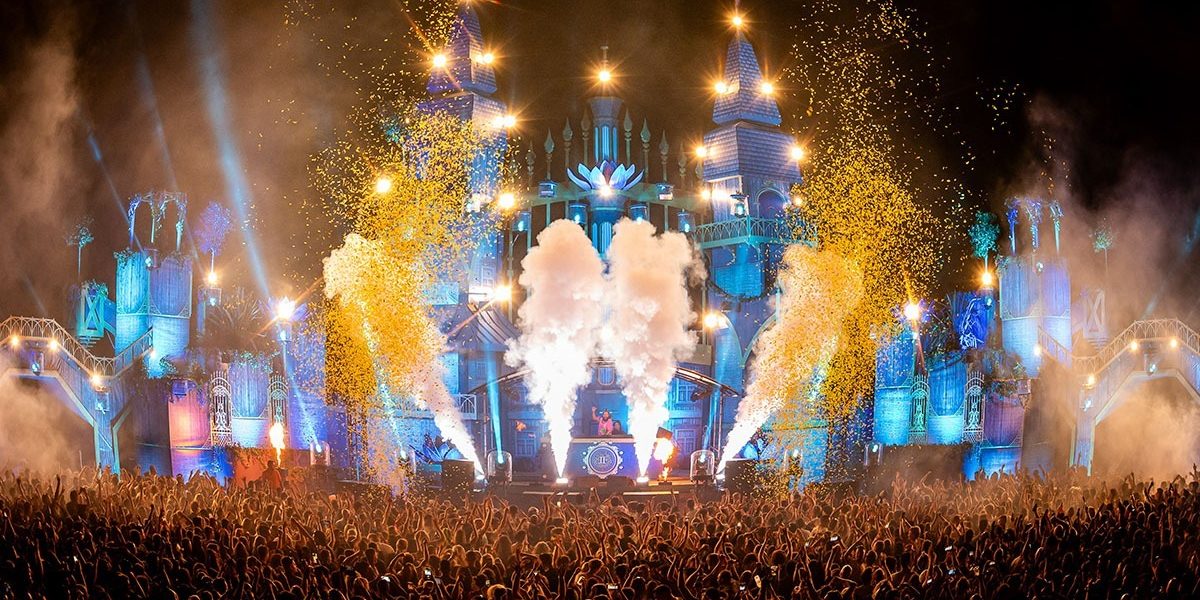
An emotional crowd is not created by chance. It is the result of staging, expectation, social proximity and shared experience.
People come together with similar motives: They want to be part of a concert, a community, a brand or a special moment.
This shared starting point forms the breeding ground for collective emotions.
Shared identity instead of an anonymous mass
Modern crowd research contradicts the old image of the irrational, uncontrollable crowd. In many situations, people in groups act in a surprisingly coordinated and considerate way when they experience themselves as part of a common “we”. Fans of a band, visitors to an industry event or participants in a corporate event share a social identity. This shared identity influences behavior, communication and reactions.
For events, this means that an emotional crowd is often cooperative, attentive and responsive as long as it feels respected and informed.
This is exactly where many successful event formats come in.
Emotion as a quality feature
Emotions are not a side effect, but a key quality indicator of events. Goosebumps during a light show, collective singing along, tense silence before a keynote or euphoric reactions to a product unveiling have a greater impact on the memory of an event than purely factual content.
From an experience design perspective, the emotional crowd is therefore a strategic lever. It strengthens loyalty, increases attention and creates moments,
which resonate for a long time and are often shared on social channels. At the same time, the expectation of authenticity is growing: the more the audience perceives itself as part of a shared experience, the more important consistency and credibility become in dramaturgy, communication and brand presence.
Typical effects of an emotional crowd in terms of quality of experience are:
- Stronger loyalty and higher intention to revisit
- Greater attention and better absorption of content
- A sense of community that promotes interaction and participation
- Memorable moments, even beyond the event itself
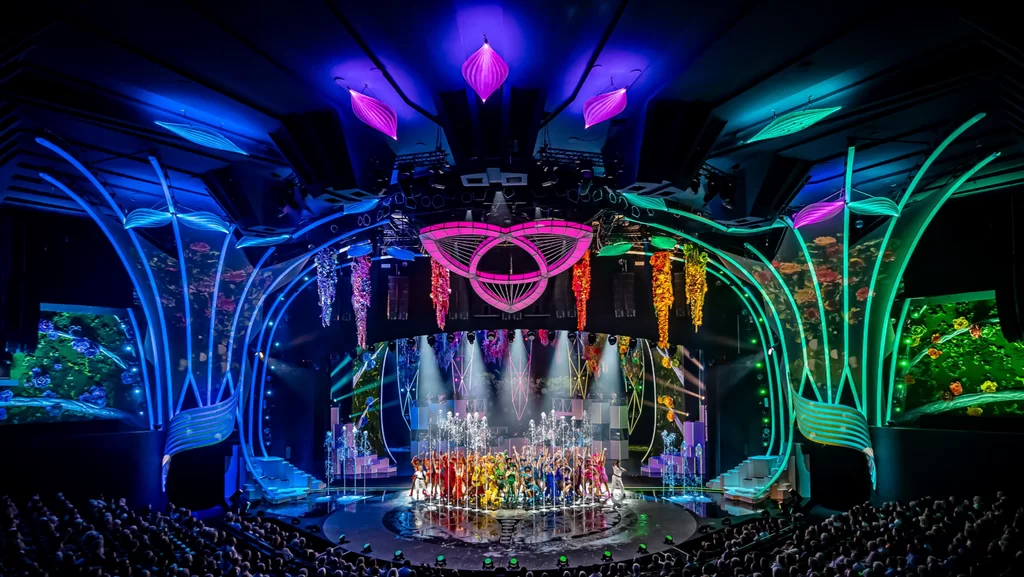
A frenzy of colors, costumes and technical brilliance: “FALLING | IN LOVE” at Friedrichstadt-Palast Berlin. | Photo: Chris Moylan
Technology as part of the emotional dramaturgy
Technology plays a decisive role here. Audio, light, video, interior design and timing interact and influence
how intensely emotions arise and spread. For Prolight + Sound as the leading trade fair for event and media technology, this is a core topic, as it shows
how technical innovations can guide and intensify emotions. Even small differences in speech intelligibility, bass distribution, visual axes or lighting moods can change whether a moment is experienced as powerful, intimate or distant.
Staging as a control instrument
An emotional crowd cannot be created at will, but it can be consciously supported. Clear dramaturgies, recognizable highlights, comprehensible processes and a consistent atmosphere provide orientation. Even seemingly banal factors such as waiting times, routing or acoustics have an influence on whether emotions remain positive or tilt. Up to this point, the emotional crowd has shown itself to be the desired target image: a resonance space for content, technology and creativity.
But it is precisely this emotional concentration that makes it sensitive.
2 The emotional crowd as a risk factor
When emotions run high, perception and decision-making behavior change. This applies not only to negative emotions, but also to positive ones.
Euphoria, anticipation or group dynamics can lead to people misjudging distances, overlooking
clues or acting more impulsively than in everyday life.
When emotions accelerate dynamics
In emotionally charged situations, people react more quickly and often collectively.
A sudden change of mood, for example due to delays, technical problems or contradictory information,
can very quickly spread to large sections of the audience.
Similarly, highly charged program items such as unexpected appearances, long-awaited highlights or the conclusion of an event can trigger collective reactions that amplify movements in the audience and can become problematic without appropriate preparation.
It is important to note that risks rarely arise from the crowd itself.
It is often external factors that interact with emotional states.
The emotional crowd then acts as an amplifier and makes weaknesses in the event design more visible.
Typical amplifiers that repeatedly play a role in practice are:
- Narrow passages or poorly visible paths
- Unclear, delayed or contradictory communication
- Long waiting times for admission, catering or sanitary facilities
- Unplanned program changes and uncertain schedules
- Heat, bad air, lack of retreat areas or inadequate signage
Rethinking security: incorporating emotions
The industry is increasingly realizing that safety is not just a question of barriers,
staffing levels or escape routes. Psychological factors play an equally important role.
Those who understand how emotions develop in a crowd can identify and mitigate risks earlier.
This starts at the planning stage: which routes are intuitive, which situations create stress,
which areas invite congestion, pressure or misunderstandings?
At this point, it is worth taking a look at existing articles in the Prolight + Sound blog, for example on the security trend in the event industry or on AI systems for security at events. AI-supported approaches in particular show how crowd density, movement patterns or unusual changes in behavior can be analyzed in real time. The aim here is not surveillance, but prevention.
Communication as a safety factor
One of the most effective measures for dealing with emotional crowds is transparent communication.
People react much more calmly when they understand why something is happening and what happens next.
Clear announcements, visual cues or digital information channels can reduce emotional tensions,
before they become unleashed. It’s not just the content that counts, but also the tone and timing:
early, comprehensible, repeatable and consistent.
The interaction between artists, moderation, technology and security is also crucial.
Uncoordinated interruptions or contradictory signals can undermine the crowd’s trust.
Conversely, a coordinated approach can stabilize the feeling of “we”, even in critical situations,
for example in the event of delays, weather events or technical failures.
Technology as a support, not a replacement 
The use of intelligent systems for crowd analysis is becoming increasingly important.
Camera-based evaluations, sensor technology or AI-supported forecasts can help to detect
changes at an early stage, such as increasing density, unusual flow patterns or recurring traffic jams.
However, responsible use is crucial.
Technology should support staff, not replace them, and always be embedded in a clear security and communication concept.
Anyone using such systems should also consider data protection and transparency.
Depending on the setup, it may make sense to work with more data-efficient key figures, such as density and flow instead of individual identification.
In this way, prevention can be strengthened without risking the trust of the audience.
Understanding the emotional crowd means thinking about events holistically
The emotional crowd is not a buzzword, but a reality of every live event.
It stands for the power of shared experiences and the responsibility that comes with them.
Those who create emotions in a targeted manner create impressive events.
Those who ignore their risks are exposing themselves to unnecessary dangers.
For the event industry, this means that experience design and safety cannot be thought of separately.
They are two sides of the same coin.
The future lies in concepts that combine technology, psychology and organization.
Emotions bring events to life. Knowledge makes them more manageable.
It is also worth taking a look at our blog post “Emotionalization of events“, in which we go into more detail about how emotions can be consciously planned and technically designed to enhance experiences and at the same time harmonize safety and dramaturgy.