

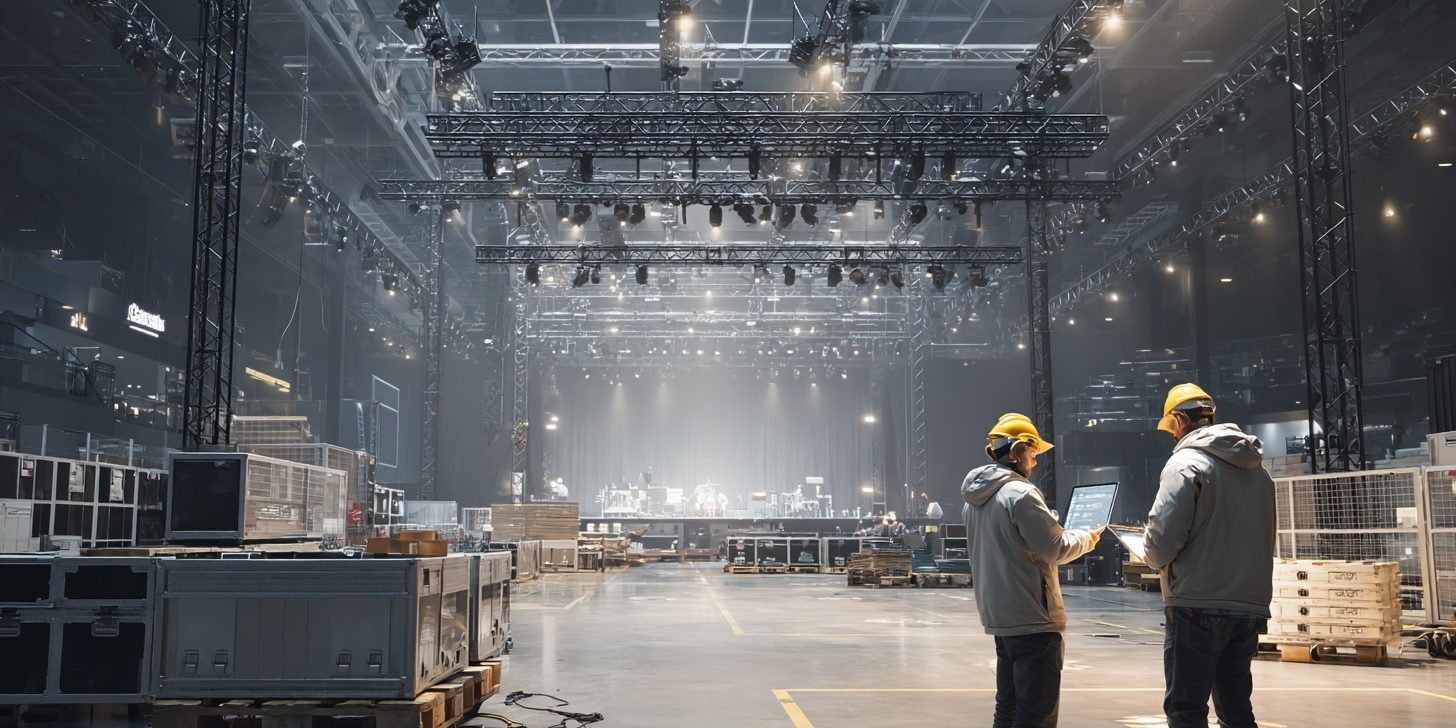
Events are among the most complex temporary working and experience environments. Within a short space of time, structures, technical infrastructures, traffic routes and common areas for often thousands of people are created. At the same time, time pressure, emotional expectations and changing participants have an impact on the processes. Against this background, safety is not a static state, but the result of forward-looking planning and continuous evaluation.
Risk documentation is one of the central tools of professional event organization. It makes risks visible, structures responsibilities and creates a reliable basis for decisions in the planning and implementation process. Used correctly, it is far more than a formal obligation. It helps organizers to think systematically about safety, to justify measures in a comprehensible manner and to make complex processes manageable.
Risk documentation in an international context
Anyone looking at events internationally quickly realizes that there is no globally standardized regulation for hazard documentation. Nevertheless, the basic understanding is surprisingly similar. Regardless of national laws or official structures, event organizers are expected to actively identify, assess and document risks. This expectation is based on occupational health and safety, liability law, insurance requirements and the general demand for professional event management.
International events, tour productions and trade fair formats in particular bring together different legal cultures. Hazard documentation plays a unifying role here. It serves as a common language for safety and risk management and creates transparency towards authorities, partners and service providers. It is therefore important to take a look at the basic international principles that characterize the requirements for hazard documentation.

No uniform event law, but comparable basic principles
Internationally, there is no uniform event law. Instead, different national regulations from labor, safety and liability law apply. Nevertheless, common basic principles can be identified across national borders that characterize the requirements for hazard documentation.
The idea of duty of care is central. Organizers bear responsibility for:
- Employees and service providers
- Artists and artists
- Visitors
- Uninvolved third parties in the vicinity of the event
This responsibility gives rise to the expectation that risks should be identified at an early stage, systematically assessed and suitable measures documented in a comprehensible manner. The hazard documentation serves as proof that risks have not been left to chance.
Risk-based approach as an international standard
 A risk-based approach has become established internationally. Instead of working through rigid checklists, each event is expected to be considered individually.
The focus is on questions such as:
- What type of event is taking place?
- Which groups of people are involved?
- What are the special spatial, technical and temporal features?
- What external influences affect the event?
The hazard documentation must reflect these factors and make transparent why certain risks are classified as particularly relevant. It is therefore not a standardized form, but an event-specific document.
International regulatory approaches at a glance
How hazard documentation is actually implemented differs internationally, in some cases significantly. National occupational health and safety laws, liability regulations and official responsibilities determine the requirements and scope of documentation. A comparative look at key international regulatory approaches shows which priorities are set and which models are used as a reference in event practice.
United Kingdom: Risk assessment as a mandatory instrument
The United Kingdom is regarded internationally as a benchmark for the systematic and legally clear handling of hazard documentation at events. A central role is played here by the Health and Safety Executive (HSE)which not only monitors general occupational health and safety obligations, but also provides specific legal regulations and guidelines for the entertainment and event sector.
- In addition to the basic requirements of the Health and Safety at Work etc. Act, the HSE has a separate topic area for Entertainment, Theatre, Film, TV and Live Events. This addresses industry-specific risks arising from temporary working structures, changing teams, technical set-ups and public traffic. The HSE thus makes it clear that events are regarded as safety-relevant working environments in their own right.
- The HSE guidance “Managing an event“, which formulates specific expectations for planning, organization and implementation, is particularly relevant for the event sector. It describes how risks are to be systematically identified, assessed and controlled – including coordination between those involved, information transfer and ongoing review of measures. The preparation of a “suitable and sufficient risk assessment” is expressly understood as a legal obligation.
- Another focus is on Crowd safety and crowd management. The HSE provides its own guidelines for this, which deal with visitor dynamics, escape routes, confined spaces and emergency responses. These aspects are an integral part of the hazard documentation and are not regarded as voluntary additional measures, but as part of the statutory duty of care.
- In addition, the Construction (Design and Management) Regulations 2015 (CDM) are particularly important for events in the UK. They also apply to temporary structures such as stages, trusses or spectator stands and require risks to be taken into account in the planning phase and responsibilities to be clearly defined. This means that risk documentation is integrated into the project at an early stage and not just limited to the implementation phase.
- This legal framework is supplemented by industry-specific advisory bodies such as the Joint Advisory Committee for Entertainment (JACE)in which representatives from industry, trade unions and professional associations discuss safety-related issues and develop guidelines together with the HSE. This underlines the fact that event safety in the UK is not only regulated by the authorities, but is also continuously updated in dialog with the industry.
Overall, it is clear that risk documentation in the UK is based on a multi-layered system of laws, industry-specific regulations and binding guidelines. For event organizers, this means a clear legal expectation: risks must not only be identified and minimized, but also documented in a structured manner, reviewed and continuously adapted. The UK therefore plays a pioneering role internationally, particularly when it comes to dovetailing general occupational health and safety with the specific requirements of the entertainment and event sector.
 European Union: Common framework, national implementation
At European Union level, there is no independent regulation that governs risk documentation specifically for events. Instead, the European approach is based on a framework of occupational health and safety legislation that is implemented nationally by the member states and specified for different sectors. For events, this means that the obligation to carry out a risk assessment and document risks does not result from an event-specific EU legal act, but from general requirements for the safety and protection of employees.
The central basis is the EU Occupational Health and Safety Framework Directive 89/391/EEC. It obliges employers to systematically identify hazards, assess risks, define suitable protective measures and document the results. This obligation applies regardless of the sector or field of activity and therefore also applies to temporary working environments such as events, where set-up, operation and dismantling are associated with specific risks.
The directive deliberately pursues a risk-based approach. It does not prescribe fixed checklists or standardized forms of documentation, but requires an “appropriate” and “sufficient” assessment of the actual hazards. For events, this means that risks must be considered on an event-specific basis rather than in the abstract. Decisive factors include the type and size of the event, technical set-up, work processes, trades involved and local conditions.
At EU level, this approach is supported by the European Agency for Safety and Health at Work (EU-OSHA) provides substantive support. The agency develops guidelines, tools and information materials for risk analysis and risk assessment which, although not legally binding, serve as a technical guide. Even if these materials are not explicitly tailored to events, the basic principles can be directly applied to the event sector, particularly in the case of complex, time-limited work processes with many participants.
A key feature of the EU approach is the transfer of responsibility to the national level. The member states transpose the framework directive into their own laws and specify the requirements through regulations, technical rules and sector-specific guidelines. This creates a common basic understanding of risk documentation within the EU, while at the same time there are differences in practice. For event organizers, this means that they must always be guided by national regulations, although these are based on a common European logic.
This framework is particularly relevant for cross-border events or international tour productions. Even if the formal requirements vary, comparable principles apply throughout the EU: Risks must be systematically recorded, assessed, documented and regularly reviewed. The risk documentation serves not only as formal proof, but also as a central instrument for coordinating safety, responsibilities and processes.
USA: Liability law and insurance as drivers
 In contrast to many European countries, there is no standardized nationwide legal requirement for risk documentation specifically for events in the USA. A formal, written risk assessment for events is not explicitly prescribed either at federal level or at state level. Instead, the need for risk analysis arises from a combination of health and safety regulations, liability requirements and insurance requirements.
A central role in this is played by the Occupational Safety and Health Administration (OSHA). OSHA requires employers to identify and evaluate workplace hazards and implement appropriate measures to control or eliminate these hazards. Even though these requirements primarily relate to employees, they are regularly applied to events in practice, as employees, service providers and temporary workplaces are affected. OSHA explicitly describes the process of hazard identification and risk assessment as part of a systematic safety management approach. In addition, the OSHA Guidelines for Safety and Health Programs define the continuous documentation and review of risks as best practice.
In addition to occupational health and safety, the common law principle of liability is a decisive factor. Organizers must take into account risks that are reasonably foreseeable. If damage occurs, courts examine whether appropriate precautionary measures have been taken. A documented risk analysis can serve as proof that risks have been identified, assessed and controlled. Precisely because there is no formal statutory documentation requirement, this evidence is particularly important in the event of liability.
Insurance requirements also act as a driving force. Many insurers demand detailed risk assessments as a prerequisite for insurance cover or for a risk-adequate premium structure. In practice, event organizers therefore rely on structured risk analysis templates, such as those provided by municipalities and authorities for special events.
Hazard documentation fulfills three main functions here:
- Reduction of liability risks
- Protection against insurers
- Proof of professional risk management in the event of damage
Hazard documentation and event safety in Asia
There is no standardized legal framework for hazard documentation or event safety in Asia. Instead, the level of safety is heavily dependent on national health and safety laws, local authority structures and the professionalization of the event industry. At the same time, awareness of risks at major events is growing, particularly in urban centers with a high population density and an increasing number of international events.
In several Asian countries, event safety is increasingly regulated by official guidelines and practice-oriented recommendations. One frequently cited example is Singapore, where government agencies have published detailed guidelines for event management. The “Workplace Safety and Health Guidelines for Event Management” provide event organizers with specific instructions for identifying hazards, assessing risks and implementing protective measures. The guidelines explicitly emphasize the importance of a documented risk analysis as the basis for safe event procedures.
In addition to such national guidelines industry meetings and trade fairs play an important role in the further development of event safety in Asia. Events such as the “Health & Safety Event Asia” bring together experts from across the Asia-Pacific region and promote exchange on risk management, occupational safety and emergency planning. These platforms help to transfer international best practices into regional contexts and strengthen the understanding of structured hazard documentation.
Crowd safety is a particular focus in Asia. High visitor numbers, limited space and complex traffic flows increase the risk of critical situations. International organizations and foundations have therefore developed guidelines that deal specifically with the planning and management of crowds. One practical example is a guide to event planning and crowd safety, which is based on international concepts and is also used in Asia. It underlines the need to assess risks at an early stage and to document safety-related decisions in a comprehensible manner.
Event Safety Alliance: International best practices for hazard documentation
In the international context of event safety, the Event Safety Alliance (ESA) occupies a special position. Founded in the USA, the non-profit organization pursues the goal of improving safety standards for live events across all industries and firmly anchoring the principle of “Life Safety First” in event planning. The ESA is aimed at event organizers, technical service providers, production managers and venue operators and sees safety as a joint task for all those involved.
The Event Safety Alliance does not regard hazard documentation as an isolated obligation, but as an integral part of comprehensive safety and risk management. Its publications make it clear that risks at events can only be effectively controlled if they are systematically recorded, evaluated and documented. This approach covers all phases of an event – from the early planning stage, through construction and implementation, to dismantling.
Of central importance is the Event Safety Guide a practice-oriented guide that is regarded as a reference in the international event industry. The guide describes typical hazards at events and provides specific recommendations for structuring risk analyses and hazard documentation. Topics covered include crowd management, emergency and evacuation planning, weather and environmental risks, technical structures, rigging and safety communication.
Even though the recommendations of the Event Safety Alliance are not legally binding, they are recognized as best practice in practice. Especially in the US context, where there is no formal legal obligation to document risks specifically for events, many event organizers use the ESA guidelines as a professional basis. They often serve as an argumentation aid vis-à-vis clients, insurance companies or in the event of liability in order to prove that risks have been professionally assessed and managed.
The Event Safety Alliance is also involved in the development of guidelines and standards that have an impact beyond individual events. In cooperation with expert committees, documents are created that address the technical, organizational and communicative aspects of event safety. The ESA provides an overview of available standards and guidance documents online.
In the article on hazard documentation, the involvement of the Event Safety Alliance makes it clear that international safety requirements are defined less by formal legislation than by established industry standards and documented best practices. For event organizers who work internationally or are guided by global quality standards, the ESA’s resources offer a valuable supplement to national regulations and official requirements.
Central requirements for hazard documentation internationally
Irrespective of the country in question, the following core requirements can be identified:
- Clear description of the event and its context
- Systematic identification of relevant hazards
- Assessment of risks according to probability of occurrence and extent of damage
- Definition of concrete measures for risk reduction
- Designation of responsibilities
- Documentation of implementation and effectiveness monitoring
The decisive factor here is traceability. The documentation must show that risks have been actively managed.
Hazard documentation in Germany

In Germany, risk documentation is firmly anchored in occupational health and safety law. It is based on the Occupational Health and Safety Act, which obliges employers to identify and assess hazards for employees, define protective measures and document the results. This obligation also applies to events and covers all phases from set-up to implementation and dismantling as soon as employees or contracted service providers are involved.
The legal requirements are specified by the accident insurance institutions, which provide industry-specific rules and information for the event industry. They specify typical hazards such as working at heights, temporary electrical installations, stage and truss constructions as well as tight time frames and changing teams. These regulations serve as a practical guide for event organizers when preparing their hazard documentation.
The safety concept must be distinguished from the risk documentation. While the risk assessment primarily concerns occupational health and safety, the safety concept deals with additional aspects such as visitor safety, fire protection, escape routes and coordination with authorities and emergency services. In practice, however, both instruments are closely interlinked, as well-founded risk documentation often forms the technical basis for a comprehensive safety concept.
In terms of content, hazard documentation should contain at least a description of the event and the processes, the identification and assessment of relevant hazards, the definition of protective measures, clear responsibilities and documentation of implementation and monitoring. The specific form is not specified; the decisive factors are comprehensibility, completeness and topicality.
With increasing technical complexity, higher crowd safety requirements, new show formats and rising expectations from authorities and insurers, hazard documentation is becoming increasingly important. Today, it is less of a static document and more of a dynamic instrument that needs to be constantly reviewed and adapted to changing conditions.
Event safety as a theme at Prolight + Sound
As the leading international trade fair for event technology, Prolight + Sound is not only a showcase for new products, but also a central platform for professional exchange on safety-related topics. Event safety issues have been playing an increasingly important role for years, albeit not always as a stand-alone topic, but often integrated into conferences, lecture programs and technology presentations.
Especially at the Prolight + Sound Guangzhou it becomes clear that safety and risk management are part of the trade fair’s self-image in terms of content. Accompanying formats such as specialist conferences, panels and workshops regularly address aspects that are directly related to event safety. These include safe stage and rigging concepts, the use of reliable AV and control technology, organizational safety issues and the professional handling of complex production conditions. International formats such as conferences on event safety have also shown in the past that the trade fair offers space for the exchange of best practices, standards and experience.
The focus here is less on formal hazard documentation and more on its practical implementation. At Prolight + Sound, event safety is primarily understood as an interplay of technology, organization and responsibility. Products and solutions are often presented in the context of real application scenarios in which safety aspects such as redundancy, compliance with standards or reliable system integration play a central role.
With the planned Prolight + Sound Bangkok Messe Frankfurt is specifically expanding its network into the Southeast Asian market. Even though no explicit event safety formats have yet been communicated for the premiere, the trade fair addresses a market environment in which event safety issues are becoming increasingly important. The strong focus on professional AV, lighting and stage technology suggests that safety-related topics such as technical operational safety, standard-compliant installations and risk-conscious planning will be part of the professional debate.
Overall, it is clear that Prolight + Sound – both in Europe and Asia – plays an important role as a knowledge and technology transfer platform for event safety. It creates a framework in which technical innovations, organizational requirements and international best practices are brought together. It thus makes an indirect but relevant contribution to the professionalization of hazard documentation and safety management in the global event industry.
Risk documentation as a professional standard
Hazard documentation is a key tool in modern event planning, both nationally and internationally. Even if legal frameworks vary, the requirements follow similar principles worldwide.
In Germany, it is clearly anchored in law and closely linked to occupational health and safety. Internationally, it is also gaining in importance as proof of professional risk management.
For event organizers, this means that well-founded hazard documentation is not only mandatory, but a decisive factor for the safety, quality and sustainability of events.