
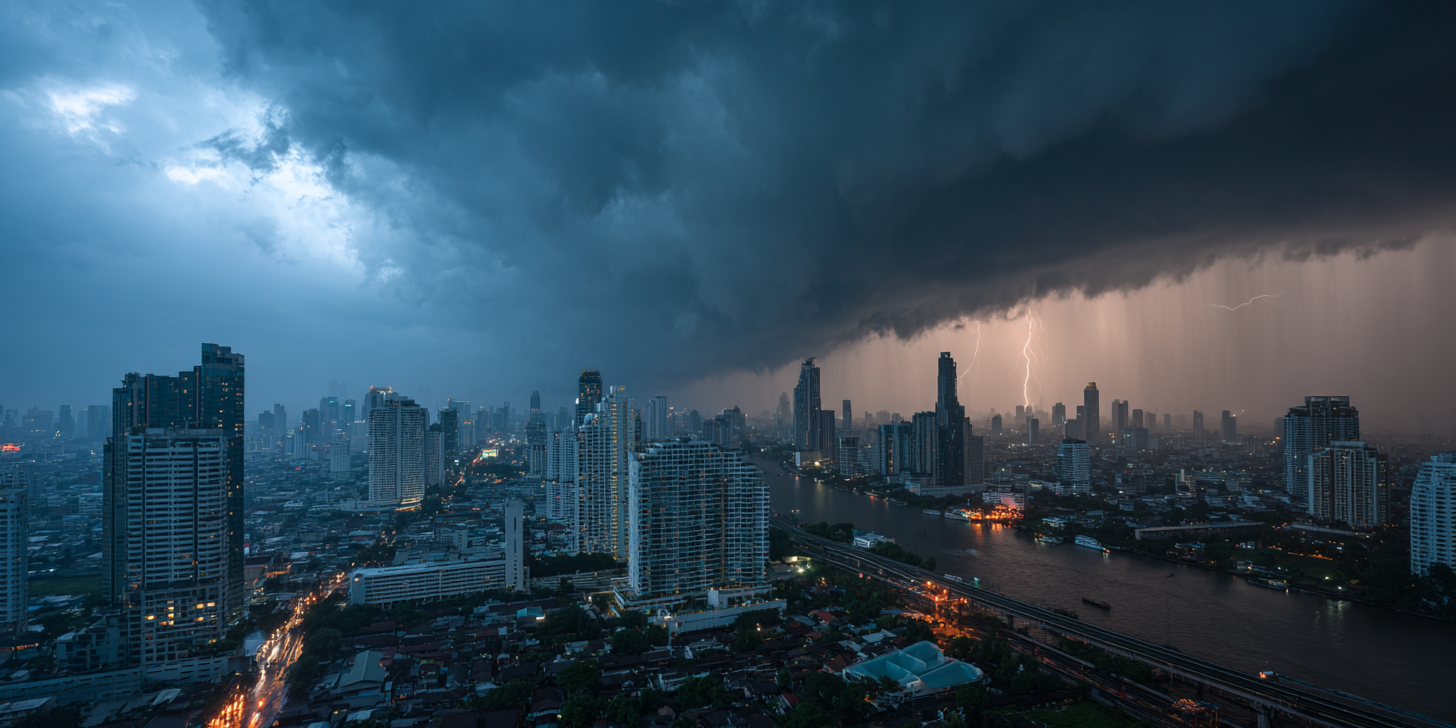
Whether it’s a trade fair, festival, show or congress, natural hazards have long been an integral part of the event industry. It is no longer just a question of unfavorable weather conditions, but of systemic risks that are becoming increasingly important due to extreme weather events, climatic changes and globally oriented event formats. For internationally established trade fairs such as Prolight + Sound, which now takes place in Guangzhou (China) and Bangkok (Thailand), professional handling of natural hazards is a central component of planning, approval and operation.
International perspective: Events under extreme conditions in Asia
In many regions of Asia, events are regularly confronted with weather conditions that differ significantly from Central European conditions. Monsoon rains, tropical thunderstorms, typhoons and heavy rainfall events are part of the normal seasonal picture in southern China as well as in Southeast Asia and shape the framework conditions for planning and operating events.
For international trade fair formats such as Prolight + Sound in Guangzhou and Bangkok, this means that water and wind-related risks are particularly relevant. Typical effects of such weather conditions are
- Very high amounts of precipitation in a short time
- Locally flooded traffic, logistics and outdoor areas
- Increased load for temporary outdoor infrastructure
- Difficult conditions for visitors and exhibitors arriving and departing
Even though modern exhibition centers in both regions are structurally well designed for heavy rainfall, critical situations often arise at the interfaces between the building and its surroundings. Loading zones, transition areas between halls, temporary waiting areas, shuttle stops or pedestrian connections are particularly susceptible to water accumulation, slippery surfaces or restricted usability.
Wind as a key risk factor
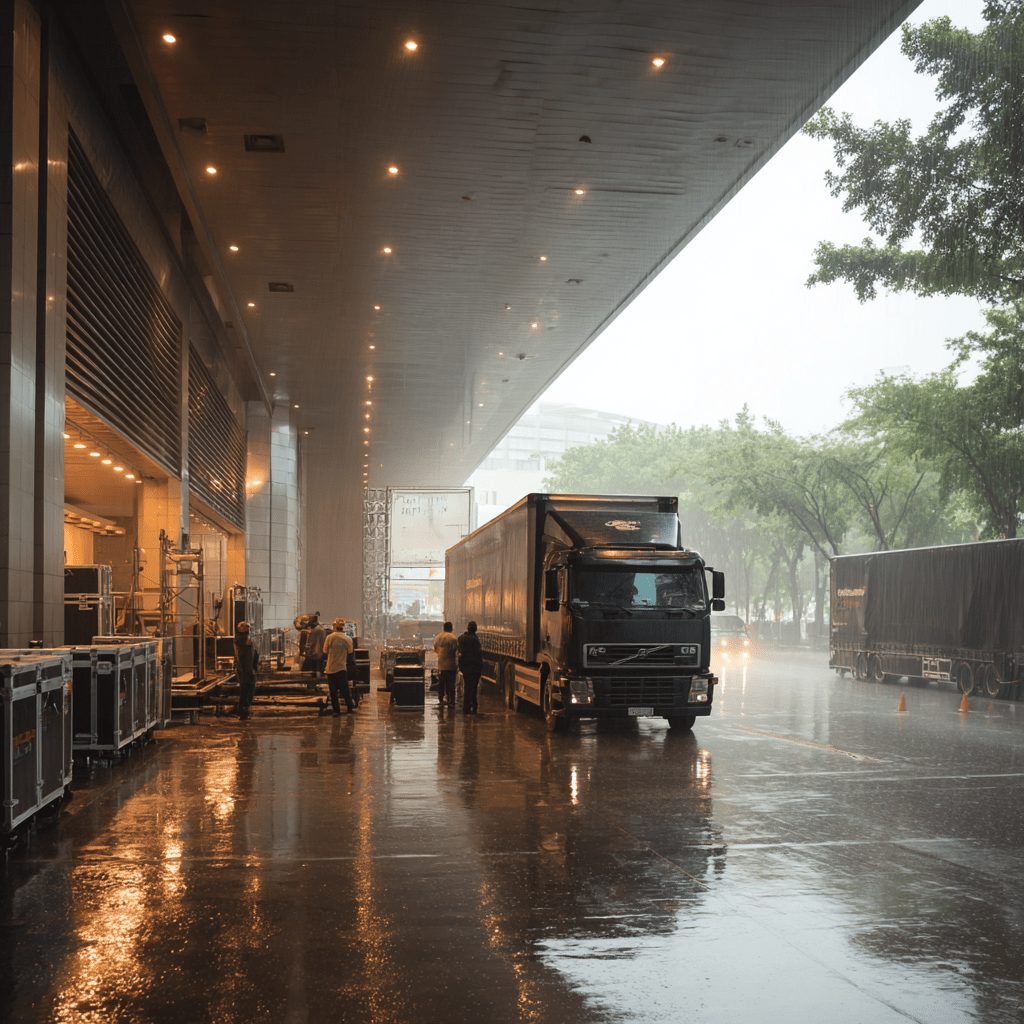
Regardless of the specific location, wind is internationally regarded as one of the most critical natural factors for events with temporary structures. Tropical storms and typhoons are the extreme examples, but even significantly lower wind speeds can make stage constructions, LED walls, banners, tents or temporary façade elements relevant to safety.
Many Asian countries work with graduated warning systems for storms and strong winds, some of which are color-coded or numerically coded. For event operations, it is crucial not only to know these warning levels, but also to consistently translate them into clear operational decisions. This includes defined threshold values for set-up, operating restrictions, interruptions or complete evacuations.
Heat and high humidity
In addition to rain and wind, heat combined with high humidity is also a significant risk factor. This stress not only affects the audience, but also crews, technical staff and exhibitors in particular, who work physically for many hours and frequently move between indoor and outdoor areas.
International event safety concepts are therefore increasingly taking this into account:
- Adapted working and set-up times
- Additional break regulations
- eine gesicherte Trinkwasserversorgung
- Shaded or air-conditioned lounge areas
Heat is not considered in isolation as a medical aspect, but as an operational influencing factor that can have a significant impact on concentration, decision-making ability and susceptibility to errors in event operations.
Common principles in the international management of natural hazards
Even if the specific natural hazards differ significantly depending on the region, an international comparison reveals very similar basic principles for dealing professionally with weather and environmental risks. Successful event safety management is based less on individual measures and more on a structured approach that understands natural hazards as a plannable part of event operations.
Planning based on realistic scenarios
Instead of abstract risk descriptions, international safety concepts are increasingly working with clearly defined scenarios. The question is not only whether an event could occur, but also how certain weather conditions would specifically affect set-up, operation, visitor flows, technology and logistics. Scenarios such as heavy rain during the arrival phase, storms during ongoing operations or heat over several event days make it possible to think through measures in advance and speed up decision-making processes.
Use of leading indicators instead of pure reaction
International best-practice approaches do not just start with acute severe weather warnings, but use early indicators such as weather trends, advance warning levels or regional seasonal patterns. This allows organizational and technical adjustments to be initiated at an early stage, such as changes to set-up times, additional safety measures or preparatory communication steps. The focus is on maintaining the ability to act before time pressure arises.
Clear decision-making and escalation structures
A key element of resilient security concepts is the clear definition of responsibilities. The clear separation between observation, evaluation and decision-making has proven itself internationally. Who evaluates weather information, who makes operational decisions and at what point are higher levels or external bodies involved? This clarity reduces uncertainties, prevents contradictory instructions and is particularly crucial in dynamic weather situations.
Prepared communication processes
Regardless of the event location, communication is one of the most critical factors in dealing with natural hazards. International concepts therefore rely on predefined communication processes that do not only arise in the event of an incident. This includes coordinated text modules for announcements, screens or digital channels as well as clear definitions of who informs which target groups and when. The aim is factual, understandable and action-oriented communication that creates trust and avoids panic.
Close coordination with local authorities and weather services
Gerade bei internationalen Veranstaltungen ist die Einbindung lokaler Expertise unverzichtbar. Regionale Behörden, Sicherheitsdienste und Wetterdienste verfügen über Erfahrung mit typischen Gefahrenlagen und deren Auswirkungen auf Infrastruktur und Bevölkerung. Eine frühzeitige Abstimmung ermöglicht es, Warnsysteme korrekt einzuordnen, regionale Besonderheiten zu berücksichtigen und Maßnahmen an lokale Anforderungen anzupassen.
These common principles form the basis for resilient safety concepts in the international event environment. They make it possible to systematically assess natural hazards regardless of location and integrate them into the operational process, regardless of whether an event takes place in Europe or in regions with pronounced extreme weather conditions.
Germany: other risks, similar requirements
Natural hazards in the German event context
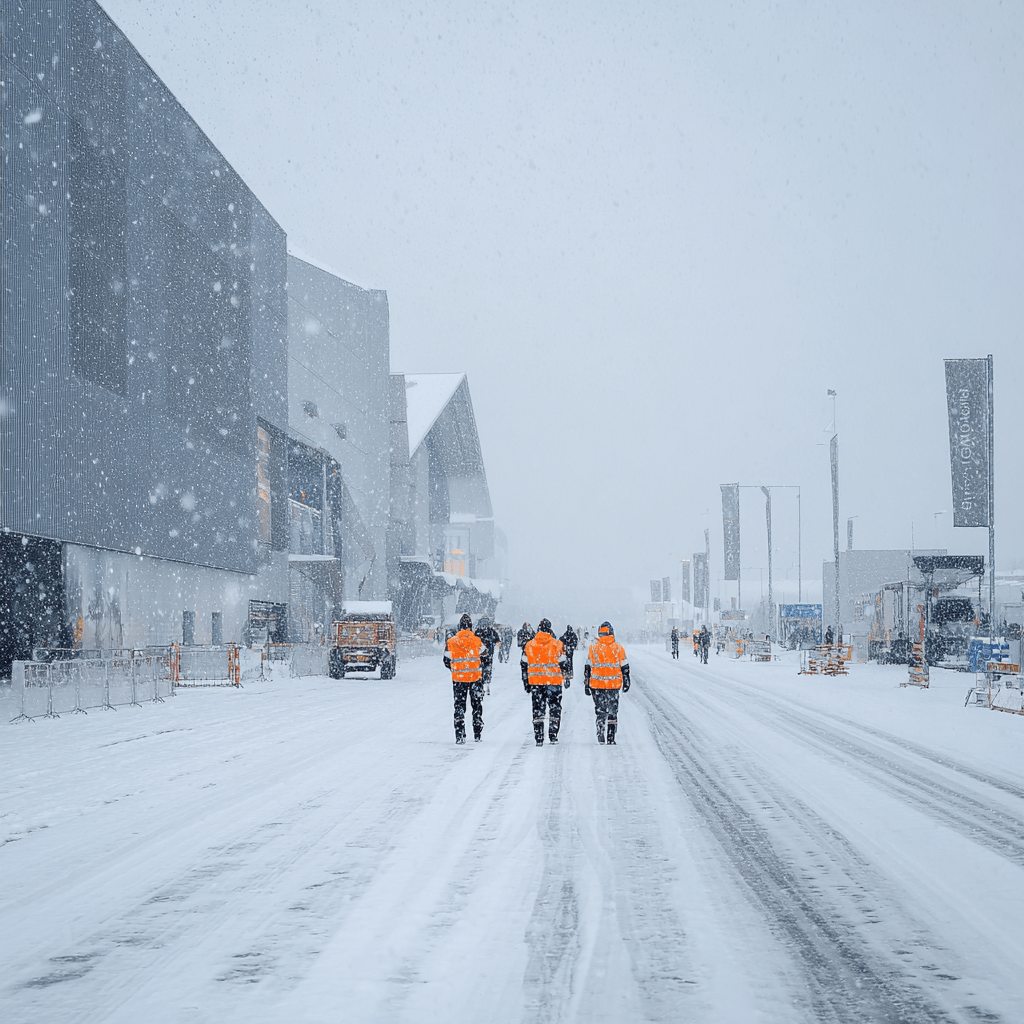
Natural hazards are also a relevant part of event planning in Germany. Although no typhoons or monsoons occur here, other risks are regularly present:
- Storm and strong winds
- Thunderstorms and lightning
- Heavy rain with local flooding
- Hot spells
- Snow and ice at winter events
Outdoor events, city festivals, open-air stages or hybrid formats with outdoor areas are particularly affected by this. Temporary infrastructures react sensitively to weather conditions and require clear operating and demolition regulations.
Risk assessment and responsibility
In Germany, dealing with natural hazards is closely linked to risk assessment. Event organizers are obliged to identify and evaluate relevant risks and define suitable protective measures. Natural hazards are not an exception, but an integral part of the safety concept.
Typische Aspekte sind:
- Bewertung von Windlasten bei temporären Bauten
- Festlegung wetterabhängiger Betriebszustände
- Securing construction and dismantling processes
- Consideration of escape and rescue routes even in adverse conditions
The article “Risk documentation for events” explains in detail how structured risk documentation should be structured in practice and what role it plays in conjunction with approvals, responsibilities and operational processes.
Natural hazards as an integral part of modern event safety
Natural hazards cannot be avoided, neither nationally nor internationally. However, they can be systematically assessed, planned and controlled. For the event industry, this means a clear change in perspective: weather and environmental conditions are increasingly no longer seen as an external disruptive factor, but as an integral part of professional event planning, especially for internationally oriented formats.
As the leading international trade fair for event technology, Prolight + Sound is not only a showcase for new products, but also a central platform for professional exchange on safety-related topics. Event safety issues have been playing an increasingly important role for years, often not as a stand-alone program item, but integrated into conferences, lecture formats and technology presentations. The professional handling of natural hazards is part of this discourse, especially where events are planned and implemented under complex climatic and infrastructural conditions.
Particularly in an international context, it becomes clear that safety and risk management are part of the trade fair’s self-image. Both at Prolight + Sound Guangzhou and with a view to Prolight + Sound Bangkok, technical operational safety, resilient system solutions and risk-conscious planning are the focus of professional discussions.
Natural hazards are not seen as an exception, but as a framework condition that must be taken into account in planning, technology and organization. In this way, Prolight + Sound contributes to anchoring event safety internationally as an integral part of professional event work.