

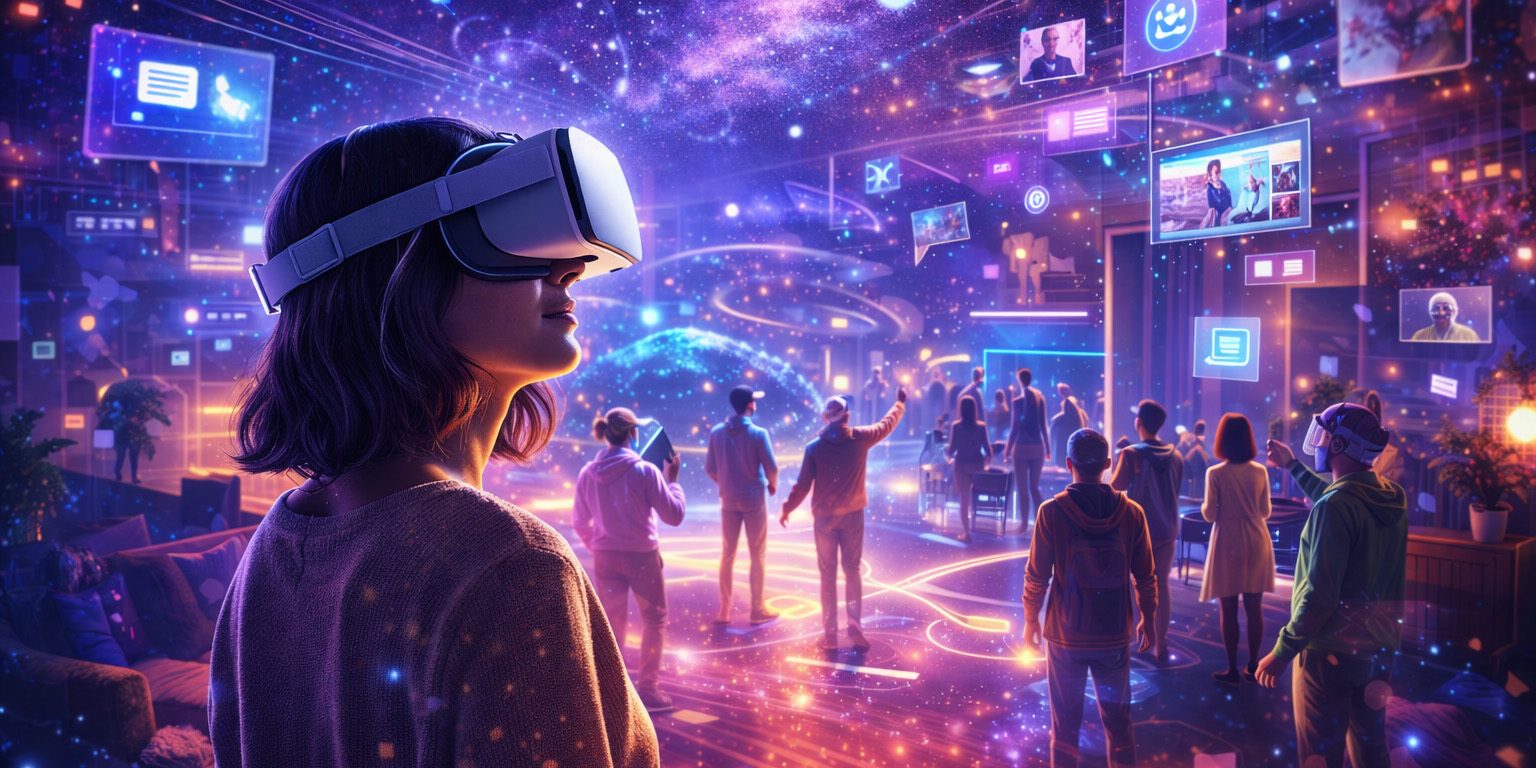
The discussion surrounding the metaverse has undergone a remarkable development in recent years. While the term was sometimes used as a vision of the future of a completely digital Internet, a more differentiated perspective has since prevailed. For many industries today, the focus is less on the grand vision and more on the specific question: which applications are already useful and economically viable today?
This question is also relevant for the event industry. After all, immersive technologies, virtual spaces and digital avatars open up new possibilities for presentations, conferences, hybrid events and brand staging. At the same time, it is clear that the metaverse does not automatically replace traditional live events, but rather creates additional formats and experiential spaces.
What is Metaverse actually?
The term metaverse does not describe a single product or platform. Rather, it is a network of digital, persistent virtual spaces in which people can interact with each other via avatars.
Typical features of such environments are
- three-dimensional virtual spaces
- Social interaction via avatars
- Real-time communication
- Virtual goods or digital assets
- persistent worlds that exist permanently
In terms of technology, the metaverse is based on a combination of virtual reality (VR), augmented reality (AR), real-time rendering, cloud platforms, game engines and, increasingly, artificial intelligence.
While early discussions were strongly influenced by gaming platforms, business and industrial applications are now taking center stage.
Why is the Metaverse interesting for the event industry?
 For event planners, the Metaverse opens up new possibilities for rethinking events in spatial terms. Virtual spaces can be used, for example, to:
- involve international participants
- Extend events regardless of physical capacity limits
- create new brand worlds
- create digital networking environments
In contrast to traditional livestreams, this is not just about broadcasting a program. Instead, a walk-in digital event environment is created in which visitors can move around freely.
Examples of this are
- virtual trade fair stands
- digital product presentations
- virtual conference centers
- immersive brand worlds
Such formats can be particularly interesting for hybrid events, where physical events are supplemented by digital experience spaces.
Virtual events in the metaverse: Opportunities for organizers
Virtual event spaces offer a number of advantages that traditional online events do not achieve to the same extent.
- New forms of interaction: participants can move around with avatars, have conversations or experience presentations together. This form of interaction is much more social than a traditional webinar.
- Global reach: Virtual events are not tied to a physical venue. International participants can be integrated more easily.
- Enhanced brand staging: The Metaverse can be used to create digital worlds of experience that would take a great deal of effort to realize physically. Brands can create futuristic spaces, interactive showrooms or virtual product worlds, for example.
- Data and analytics: Digital platforms enable a detailed analysis of user behavior. For example, event organizers can track which content is particularly popular.
Technological foundations for metaverse events
The implementation of virtual events in the metaverse requires the interaction of different technologies. Unlike traditional streaming formats, this creates a three-dimensional, interactive environment in which participants can move around, communicate with each other and experience content together. In order for such an event to function in a technically stable manner, several systems need to work together. These include real-time rendering, network and cloud infrastructure, communication solutions and sensor technology for interaction and tracking.
Game engines as the basis for virtual event spaces
Many virtual event platforms are based on so-called game engines. Among the best known are the Unreal Engine and Unity. These software environments were originally developed for computer games, but have now also established themselves in architectural visualization, film production and event technology.
Game engines make it possible to calculate three-dimensional worlds in real time. This allows virtual stages, exhibition halls or conference rooms to be created that can be changed dynamically. Presentations, videos or interactive installations can be integrated directly into these environments.
This has several advantages for event organizers:
- Realistic visualization of stages and event spaces
- Interactive objects and media surfaces
- Integration of avatars and visitor movements
- Flexible adaptation of the environment during the event
For hybrid event formats in particular, such digital spaces can also serve as an extension of physical venues.
Virtual reality and augmented reality
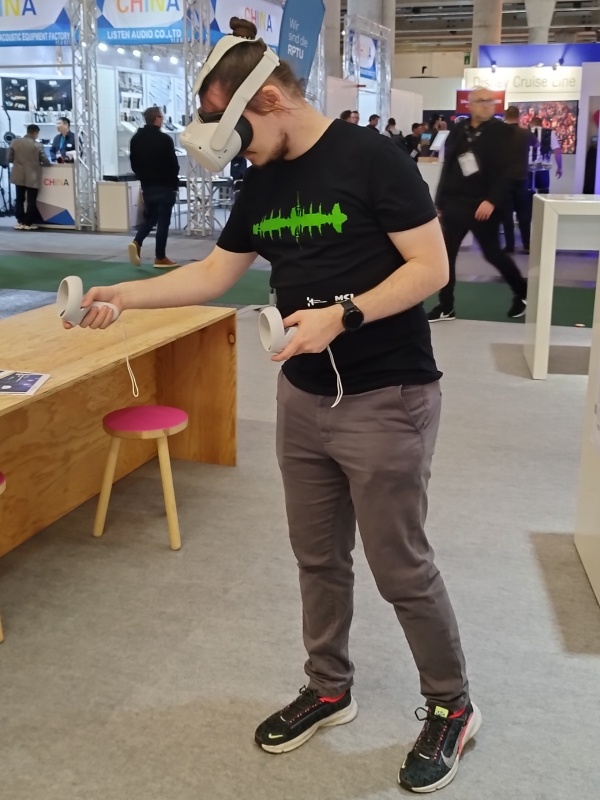
Gamification you can touch: VR applications inspired visitors to Prolight + Sound.
Virtual reality plays an important role in immersive event experiences. VR headsets allow visitors to fully immerse themselves in virtual spaces and experience events from a new perspective.
However, many platforms deliberately do not rely exclusively on VR. Access via desktop applications or browser solutions remains important in order to reach as many participants as possible.
In addition to VR, augmented reality (AR) is also increasingly being used. Digital content is superimposed onto real environments. For events, for example, this can mean
- virtual stage sets
- Digital product visualizations
- AR-supported presentations
- Hybrid shows with virtual elements
In combination with LED walls, projection or virtual production, new forms of mixed reality staging are emerging.
Cloud infrastructure and scalability
Virtual event platforms often have to support thousands of participants at the same time. This requires powerful cloud infrastructures.
Servers take on several tasks:
- Synchronization of the virtual environment
- Management of user movements and avatars
- Streaming audio and video content
- Storage of event data and interactions
Cloud solutions enable flexible scaling of the systems. Depending on the number of participants, additional server resources can be added automatically.
For event organizers, this means that even large international events can be held virtually without the need to set up local server structures.
Real-time communication as the core of social interaction
Communication between participants is a key component of virtual events. Unlike traditional livestreams, this is about social interaction in real time.
Technically, this is made possible by various systems:
- Voice chat
- Video communication
- Chat functions
- spatial audio
Spatial audio in particular plays an important role. The volume of a voice changes depending on the distance between avatars. This makes conversations seem more natural and more reminiscent of real-life networking situations.
For networking events or virtual trade fair stands, this technology can be crucial for creating an authentic atmosphere for discussions.
Motion tracking and interaction
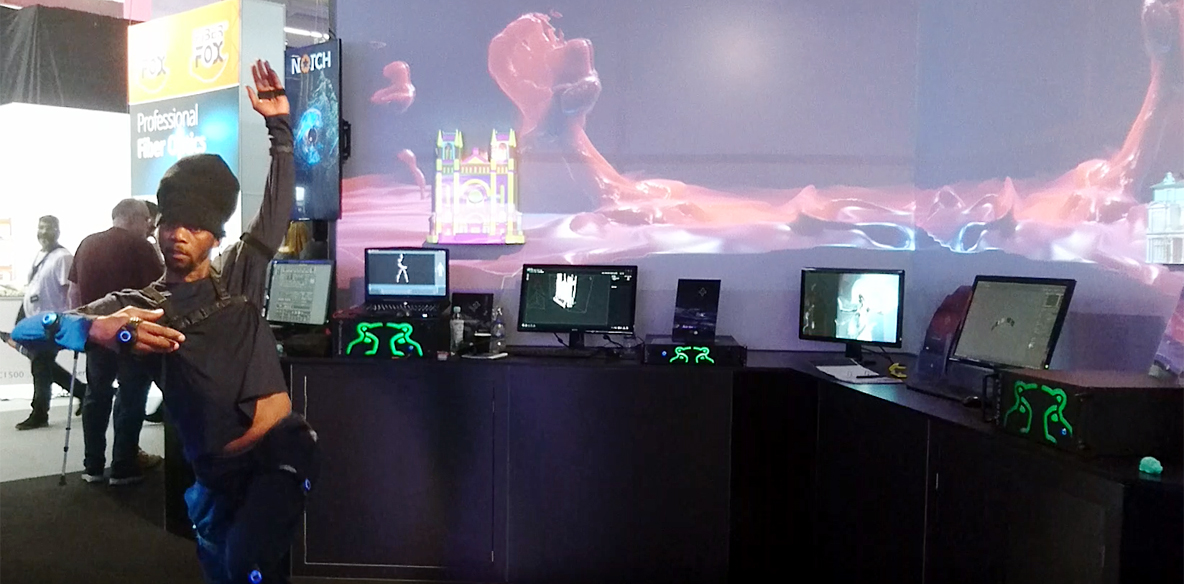
Motion Capture Prolight + Sound 2018
Another important component of immersive event formats is interaction with the virtual environment. Motion tracking systems capture the movements of people or devices and transfer them to digital spaces.
Various technologies are used for this:
- Camera-based tracking
- Sensor-based motion capture systems
- Hand tracking with VR headsets
- Tracking of controllers or mobile devices
Such systems enable, for example
- Avatars that simulate the movements of real people
- interactive presentations
- virtual stage performances
- Motion-capture-supported shows
Especially in combination with virtual production and XR stages, this opens up new possibilities for event staging.
Immersive audio and digital light staging
Traditional event technology also continues to play an important role in virtual worlds. Spatial audio technologies and digital lighting control are particularly relevant.
Spatial audio systems make it possible to position sound sources precisely in the room. This creates a much more realistic acoustic environment.
Lighting design can also be implemented virtually. Digital lighting systems can be integrated directly into virtual event spaces and make this possible:
- dynamic lighting scenes
- interactive effects
- Synchronization with music or video
- virtual stage lighting
For event productions, this creates an interesting interface between classic event technology and digital worlds of experience.
Interaction of technologies
Metaverse events only work if all these technologies are linked together. Game engines create the environment, cloud infrastructure provides the platform, communication systems enable interaction and tracking technologies ensure movement and immersion.
For the event industry, this means an increasing fusion of IT, gaming technology and traditional event technology. Event professionals with a technical background in particular can use this development to develop new formats between live events, digital production and virtual experiences.
Challenges and limits of virtual event worlds
Despite the possibilities, metaverse events are not yet a standard format. There are several reasons for this.
- Hardware and access: Not all participants have VR headsets. Many platforms therefore rely on hybrid solutions that can also be used via a browser.
- Production costs: Creating high-quality 3D worlds is time-consuming. Organizers incur additional costs for design, development and platform operation.
- User acceptance: Many people still prefer traditional video conferences or physical events. Virtual worlds must therefore offer clear added value.
- Technical hurdles: Network performance, graphics performance and platform stability play a decisive role in a positive user experience.
Metaverse, XR and spatial computing: where the market is heading
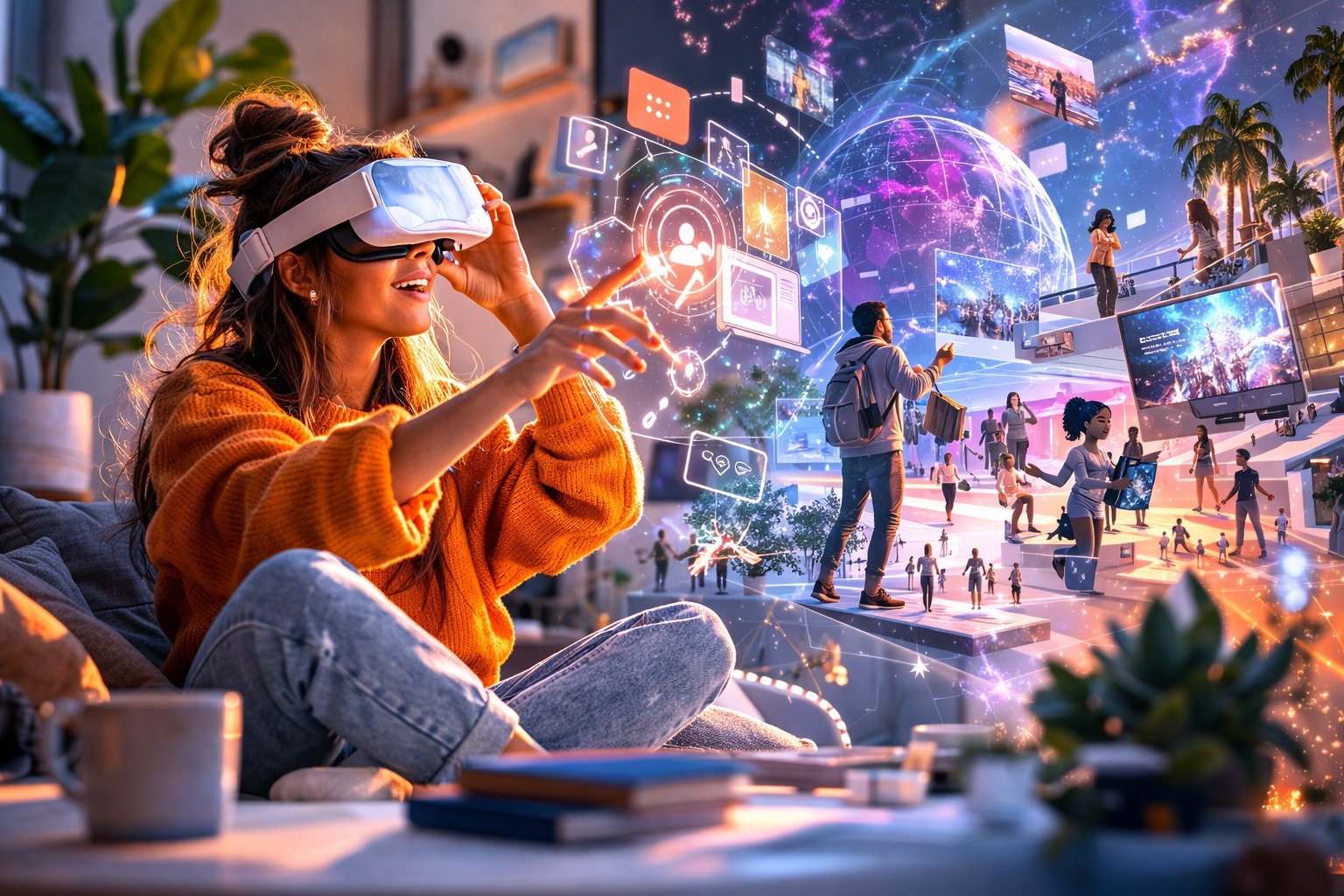 The term metaverse is now used less frequently than it was a few years ago. Instead, terms such as extended reality (XR) or spatial computing are becoming more central to the discussion. This development shows that the industry is increasingly moving away from a very general vision of the future and focusing more on specific technological applications.
This development opens up a range of new possibilities for the event industry. Immersive presentations can bring content to life spatially and visualize complex topics vividly. Virtual showrooms enable companies to stage products or brand worlds digitally and involve visitors interactively. Digital twins of event venues are also becoming increasingly important. They allow event locations to be mapped virtually, processes to be simulated and events to be planned in advance. At the same time, new forms of hybrid events are emerging in which physical events are combined with digital experience spaces.
The connection between the real stage and digital expansion is particularly interesting. For example, a physical event can be supplemented by virtual spaces in which additional content is provided or networking opportunities are created. This creates new formats that combine live experiences with the possibilities of digital technologies and extend events beyond the actual venue.
What role could the metaverse play for events in the future?
The future of events is unlikely to be completely virtual. Live experiences will remain a central component of many formats, as personal encounters, shared atmospheres and direct impressions can only be replaced digitally to a limited extent. At the same time, however, hybrid forms are increasingly emerging that combine physical events with digital extensions.
These include hybrid conferences, for example, where face-to-face events are supplemented by virtual event spaces. Digital exhibition stands can also be a useful addition to a physical trade fair by providing additional content or reaching visitors independently of the event location. In addition, virtual pre-events or community platforms are becoming increasingly important, as they enable exchange and networking in the run-up to an event. Immersive product launches, in which digital experience spaces are combined with real presentations, also open up new opportunities for brand presentations.
For event professionals, the question is therefore not so much whether virtual worlds will completely replace traditional events. Rather, the key question is how digital technologies can be used to enhance live events and create new experience formats. For international conferences, brand activations or digital community events in particular, immersive platforms can open up additional perspectives and make events accessible beyond the actual venue.
Prolight + Sound Guangzhou: Where metaverse technologies for events become visible
The topic of metaverse and immersive technologies is also increasingly being discussed at international trade fairs in the event industry. One example of this is Prolight + Sound Guangzhou, one of the largest trade fairs for event technology, lighting, audio and entertainment technologies in Asia.
The trade fair, which takes place annually in Guangzhou, China, regularly showcases new developments in the fields of XR technologies, virtual production, immersive audio and visual systems and interactive media installations. These technologies form an important basis for applications that are often mentioned in connection with the Metaverse.
The focus here is less on a single “metaverse platform”. Rather, it is about the technical infrastructure for immersive experience spaces, for example:
- Real-time 3D rendering for virtual event environments
- LED and projection technologies for virtual production sets
- Motion tracking and interaction systems
- Immersive audio formats and spatial audio
- Mixed reality applications for shows and presentations
In Asia in particular, it is clear how closely entertainment technology, gaming, virtual worlds and event production are now interlinked. Visitors to trade fairs can often experience installations that combine traditional event technology with digital 3D worlds.
For event professionals, the trade fair provides an outlook on how future event formats could develop. Virtual stage sets, interactive 3D environments and digital avatars can increasingly be combined with real stage productions. This creates new hybrid forms between live events, digital staging and virtual worlds of experience.
Even if the term metaverse is now less at the center of the discussion, Prolight + Sound Guangzhou clearly shows that the underlying technologies continue to gain in importance. This opens up new opportunities for event organizers and event technicians to develop immersive and interactive event formats.
Metaverse as a supplement to live communication
The metaverse remains an exciting field of experimentation for new event formats. Although the initial hype has died down, the underlying technologies are continuing to develop.
For the event industry, this means one thing above all: virtual worlds are not a substitute for live events, but an additional level of event communication.
Those who gain experience with immersive formats early on can reach new target groups and develop innovative event concepts.
This makes the metaverse less of a futuristic vision of a new internet. Instead, it is developing into a practical tool for digital and hybrid event experiences.