

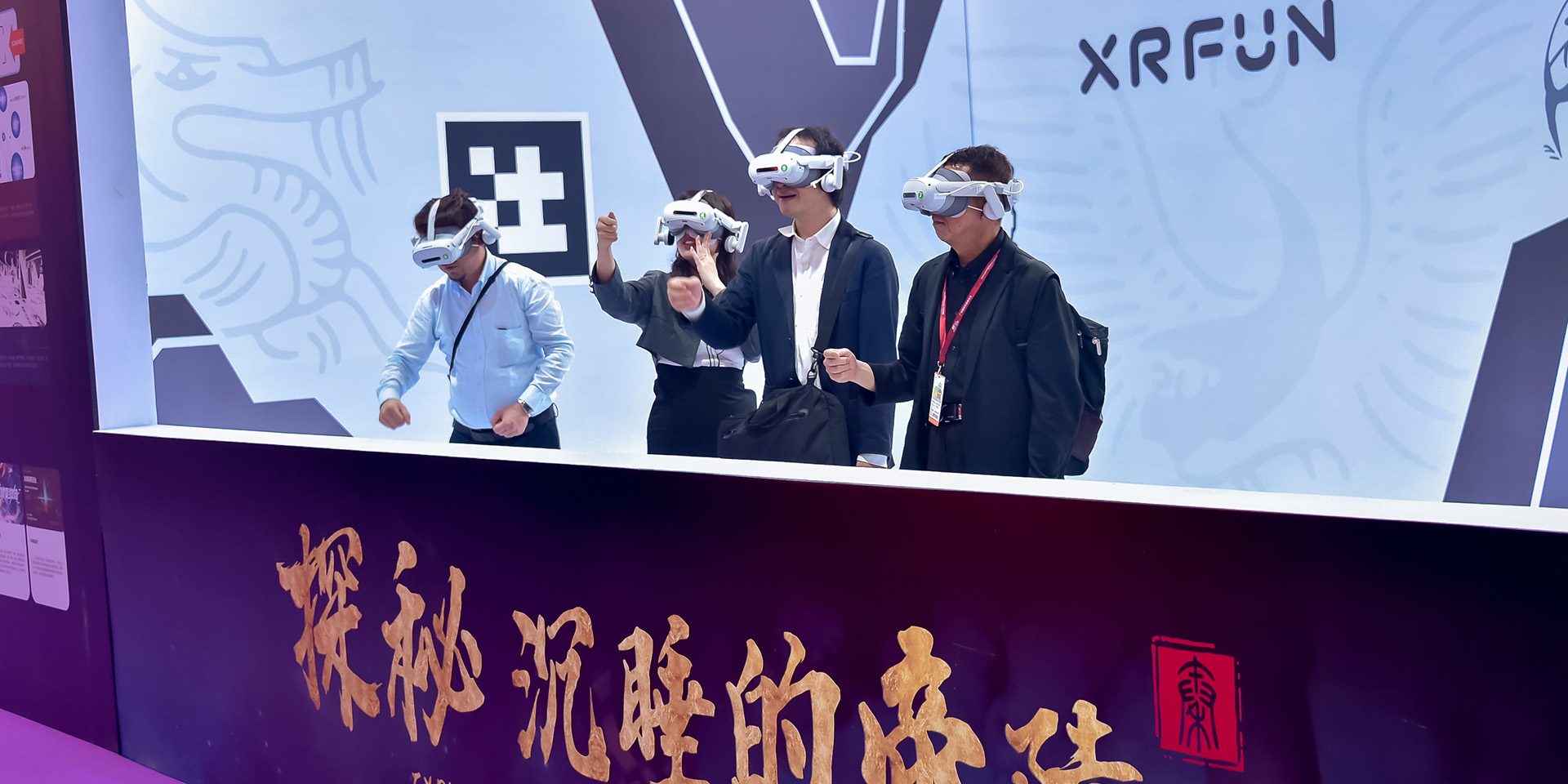
Immersive technologies have changed fundamentally in just a few years. What once began as an isolated VR demonstration with a headset at an exhibition stand is now part of complex experience architectures. XR, virtual reality and metaverse concepts no longer stand for individual attractions, but for integrated systems that combine audio, light, visuals, real-time rendering and network technology.
At Prolight + Sound Guangzhou, we bring together innovations that transform spaces, connect people and enable new forms of experience. We see XR and immersive applications as powerful tools that have a lasting impact on events, installations, educational concepts and brand communication. Our aim is to create a platform that turns technology into real experience and entertainment into lasting impact.
From VR attraction to experience ecosystem
Just a few years ago, VR was considered a spectacular eye-catcher. A headset, a brief immersion in a virtual world, an aha moment. But this approach falls short today. Immersion is increasingly being thought of as an overall spatial system.
This was already evident in previous editions of the trade fair. Providers such as XRFun presented large-scale location-based VR approaches that integrate several visitors into virtual environments at the same time. The Visual X platform made it clear how digital vision, intelligent displays and immersive scenographies can be combined to create complex experience spaces.
The decisive change lies in scale and integration. Immersion is no longer created by the headset alone, but by the interplay of space, content, interaction and technical infrastructure.
XR needs infrastructure
Anyone planning immersive events today is not just thinking about content. They are thinking about system architecture.
On the hardware side, companies such as PICO, DPVR and HTC develop powerful standalone headsets and business solutions designed for professional applications. They provide access to the virtual world.
But large-format visual environments are just as important. LED manufacturers such as Absen, Unilumin or ROE Visual are driving XR stages, LED tunnels and immersive walls. These technologies make it possible to transfer virtual content into physical spaces and realize hybrid setups.
In addition, there are real-time engines such as the Unreal Engine developed by Epic Games, which has long since become the standard for virtual production, digital twins and interactive 3D environments. It forms the software level on which virtual worlds are created and controlled.
Only the interaction of these components makes Immersion scalable. Network protocols, tracking systems, synchronization and media servers ensure that all elements work together precisely. Immersion is therefore less a product than an ecosystem.
Metaverse in a professional context
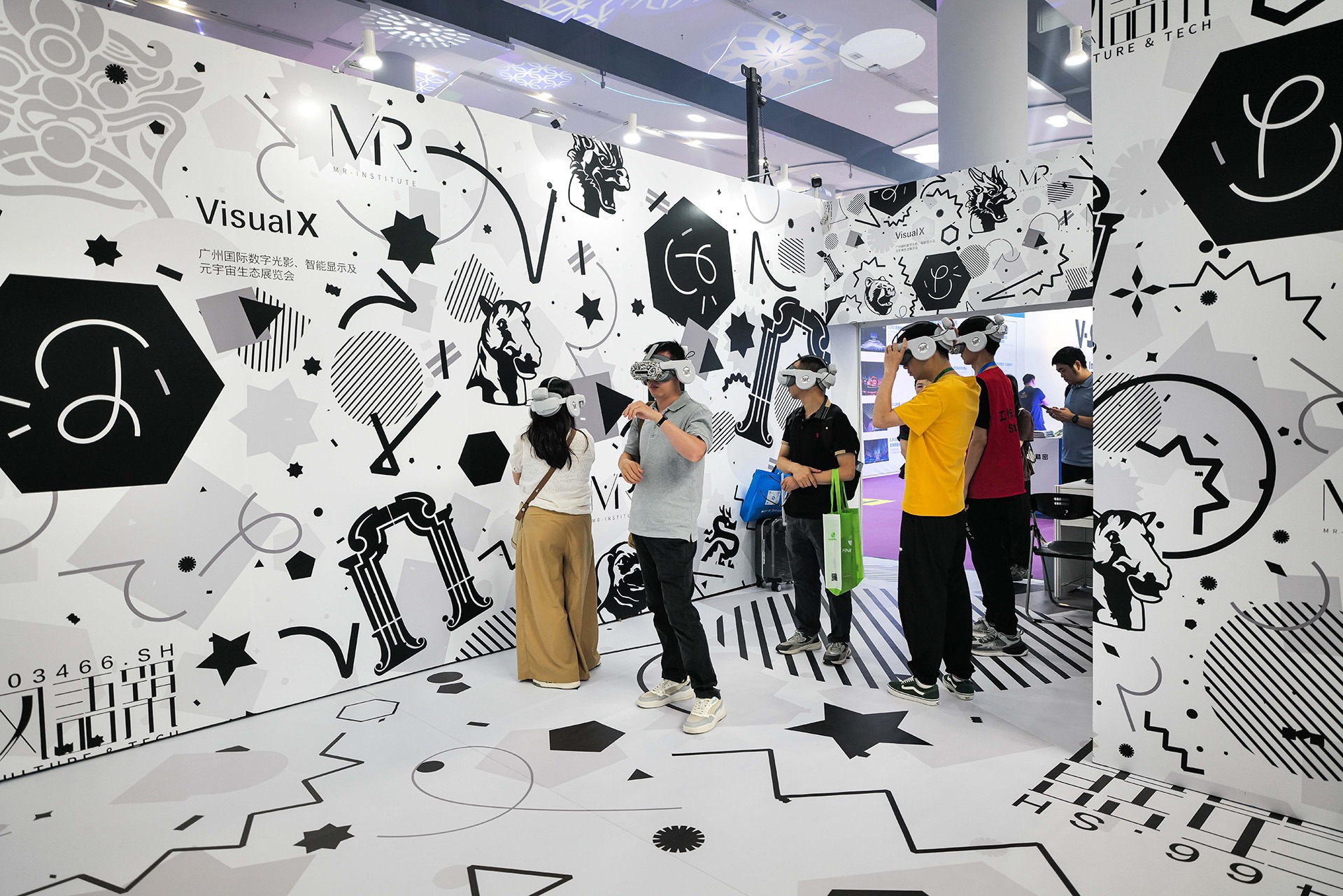
Visitors test VR headsets at the immersive VisualX exhibition stand at Prolight + Sound Guangzhou 2025.
The term metaverse has been the subject of much discussion in recent years. While some of the hype in the consumer sector has been put into perspective, the concept is gaining traction in the professional event and installation market.
In the context of live communication, metaverse does not necessarily mean a single platform. Rather, it describes persistent digital spaces that combine physical and virtual levels. Digital twins of event venues, hybrid event platforms, XR-based training environments or interactive brand spaces are concrete manifestations of this idea.
Platforms like ZEPETO show how social interaction, avatars and digital identities can be integrated into virtual worlds. This is giving rise to new formats for the event industry: Pre-events in virtual space, digital extensions of physical trade fairs or permanent brand spaces that last beyond individual event days.
Prolight + Sound Guangzhou forms an interface between entertainment technology and professional applications. Here, metaverse is not discussed as a trend concept, but as a technical architecture.
Location-based VR as a scalable event format
Another component of immersive strategies is location-based VR. Unlike individual headset experiences, the focus here is on collective experiences. Free-roam concepts and social VR formats enable groups to immerse themselves in virtual scenarios together.
This opens up new possibilities for event organizers: immersive team events, interactive product presentations or themed experience spaces that go far beyond traditional trade fair presentations.
Beyond Entertainment: New fields of application
 Against this backdrop, “Where tech goes beyond entertainment” takes on a clear meaning in terms of content. Immersive technologies are no longer used exclusively for spectacular shows. They are used in education, culture, tourism, corporate communication and simulation.
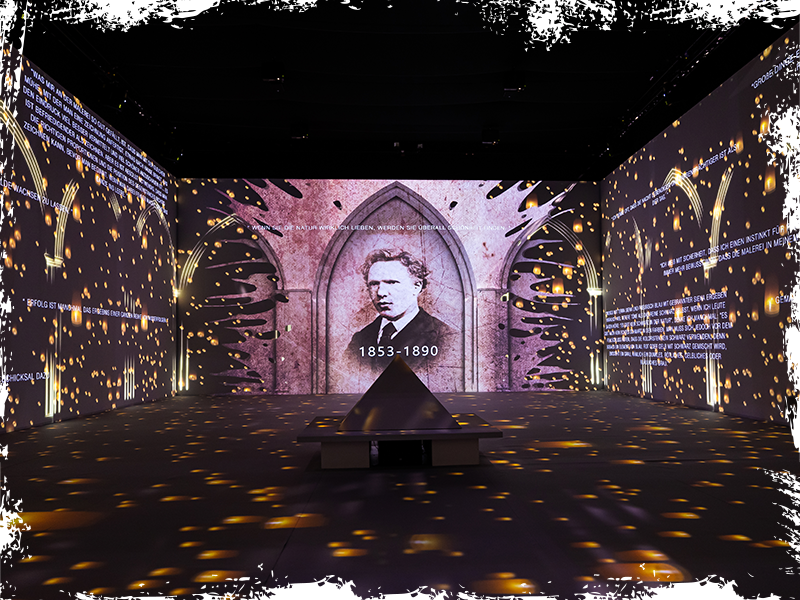
Museums and cultural institutions are now using XR not only to show historical and artistic content, but also to make it spatially tangible. Immersive exhibitions such as Van Gogh – The Immersive Experience or the digital productions at the Bassins de Lumières in Bordeaux combine monumental projections, 3D sound and, in some cases, VR stations to create walk-in visual worlds. In former industrial halls, multi-sensory spaces are created in which visitors wander through content instead of looking at it head-on.
Companies are taking a similar approach. Brands such as BMW and Porsche use virtual production studios with LED volumes to stage vehicles in photorealistic, virtual environments without having to be physically present at each location. Products can be configured in real time, scenarios can be flexibly adapted and hybrid launch events can be played out physically and digitally at the same time. Technologies such as the Unreal Engine from Epic Games often form the basis for these real-time workflows.
Immersive simulations are also becoming increasingly important in the field of safety and training. Airports, energy suppliers and industrial companies work with digital twins of their systems to test processes and simulate emergency scenarios. In the event industry itself, venues are increasingly being modeled virtually in order to test visitor flows, evacuation routes or setups realistically in advance. VR-based training systems enable complex or risky situations to be practiced safely before they take place in reality.
These examples illustrate that XR, virtual production and digital twins have long since become concrete tools in the professional environment. Prolight + Sound Guangzhou focuses on precisely this interface: Immersive technologies are not considered in isolation, but rather in the interplay of display, audio, real-time rendering, network technology and scenography.
A look ahead
The upcoming edition of Prolight + Sound Guangzhou will show that immersion is no longer a niche topic. XR, VR and metaverse technologies are developing into central components of professional production processes.
The decisive question is no longer whether immersive technologies are used, but how they are integrated. What role does real-time rendering play in exhibition stand construction? How can LED installations be combined with tracking systems? What network infrastructure is required to implement hybrid formats in a stable manner?
Immersion is thus becoming a strategic topic for planners, integrators, creatives and technicians alike.
Today, XR, Metaverse and virtual reality represent a shift within the event industry. From effect to infrastructure. From individual applications to networked systems. From pure entertainment to professional applications.
Prolight + Sound Guangzhou offers a stage where this development becomes tangible. When technology goes beyond entertainment, new spaces for communication, interaction and experience are created.
Guangzhou shows that immersion is not just a trend. It is a building block of the next generation of events.